

Piano Practice Your Child Wants (Part 2 of 2) - Mozart’s Memo - Volume 89
Our 32nd Annual Spring Recital is June 5, 6, & 7.
Click the link for more information and to sign up.
Feature Article - Piano Practice Your Child Wants (Part 2 of 2)
By Pamela Cornell, Director
In the last article, the focus was on the importance of the home practice setting, what works best for children and how to support your pre-school aged piano student at home. If you missed it, you can read it here: https://www.moveovermozart.net/newsletters/piano-practice-your-child-wants-part-1-of-2
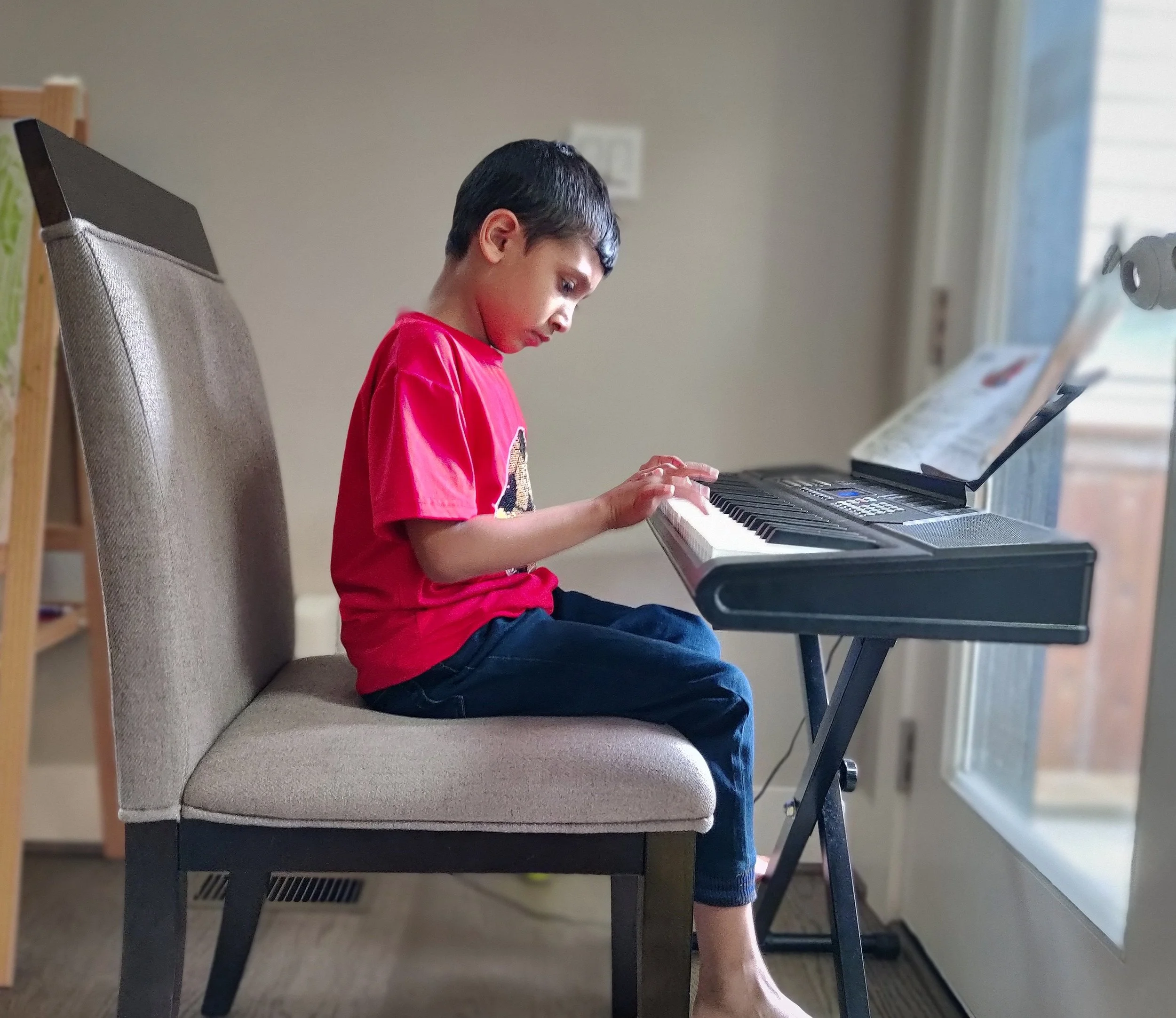
As children get older, they crave more independence, but they don’t always have the experience or training to know how to practice. Parents, especially those without a music background, know their child needs more support and guidance, but don’t always know the best way to provide that. This article should shine some light in this area.
What Piano Time Can Look Like - Ages 5 - 8 years
Rethinking “Practice.” Before getting into the how, it helps to shift the mindset.
Piano Time - Try thinking of it as “piano time” instead of practice. Playing an instrument is all about the motivation. A child who sits down and plays music they love is already building confidence, familiarity, and connection with the instrument. That natural motivation is something to protect and nurture. If you have a child that loves playing the piano but never wants to play their assignment – no worries! Getting to the piano and getting started is half the battle. You already have a child that loves to play the piano. Let's continue to encourage that love!
Keep Piano Separate From Discipline - If you want to balance piano practice with video games, that is fine. But telling a child they have to practice 10 extra minutes because they have a messy room is not appropriate.
Quality Over Quantity - Instead of using a timer, set a simple goal. There’s a sense of pride that comes from finishing something clear and achievable. If your child chooses a goal that feels a bit out of reach, you can gently guide them toward smaller steps that lead in that direction. Ideally, the goal is something they can complete in just a few minutes. A few minutes of focused playing is far more valuable than sitting at the piano, fidgeting, adjusting their seat, staring intently at their music and basically just watching the clock. Instead, shift the focus from how long they sit to what they actually accomplish.
Motivation - Ideally, we want our children to learn to play the piano because they are excited about playing and love making music. But realistically, although that may be a dream within each of us, it takes daily discipline to attain that dream. Sometimes external factors can assist with the internal motivation. Rewards can be anything! Planning a play date, choosing a special dinner, watching a favorite show or spending time at a park are great examples of a reward. I had one older student that always forgot to practice. When I asked if she was done and wanted to quit lessons, she said emphatically, “No!” She really enjoyed playing the piano; she just would forget to practice each day. Then her mom made a rule that she could only have screen time if she remembered to practice that day. Suddenly, practicing wasn't an issue any more!
Listening - Learning to play an instrument is not just about playing; it is also about listening. Listening to a variety of music and instruments is very motivating and encouraging. Take advantage of live music whenever possible. Listen to the songs your child is learning to play. I had a 4 year old, after listening to Dvorak's New World Symphony many times; she was able to play her color-coded version of "Going Home" (which is based on the main theme) with perfect rhythm.
Growing Independence With Support - Ages 8 - 14 years
Although a child this age is capable and probably prefers to practice without constant parent supervision, they will need a little assistance in the following areas.
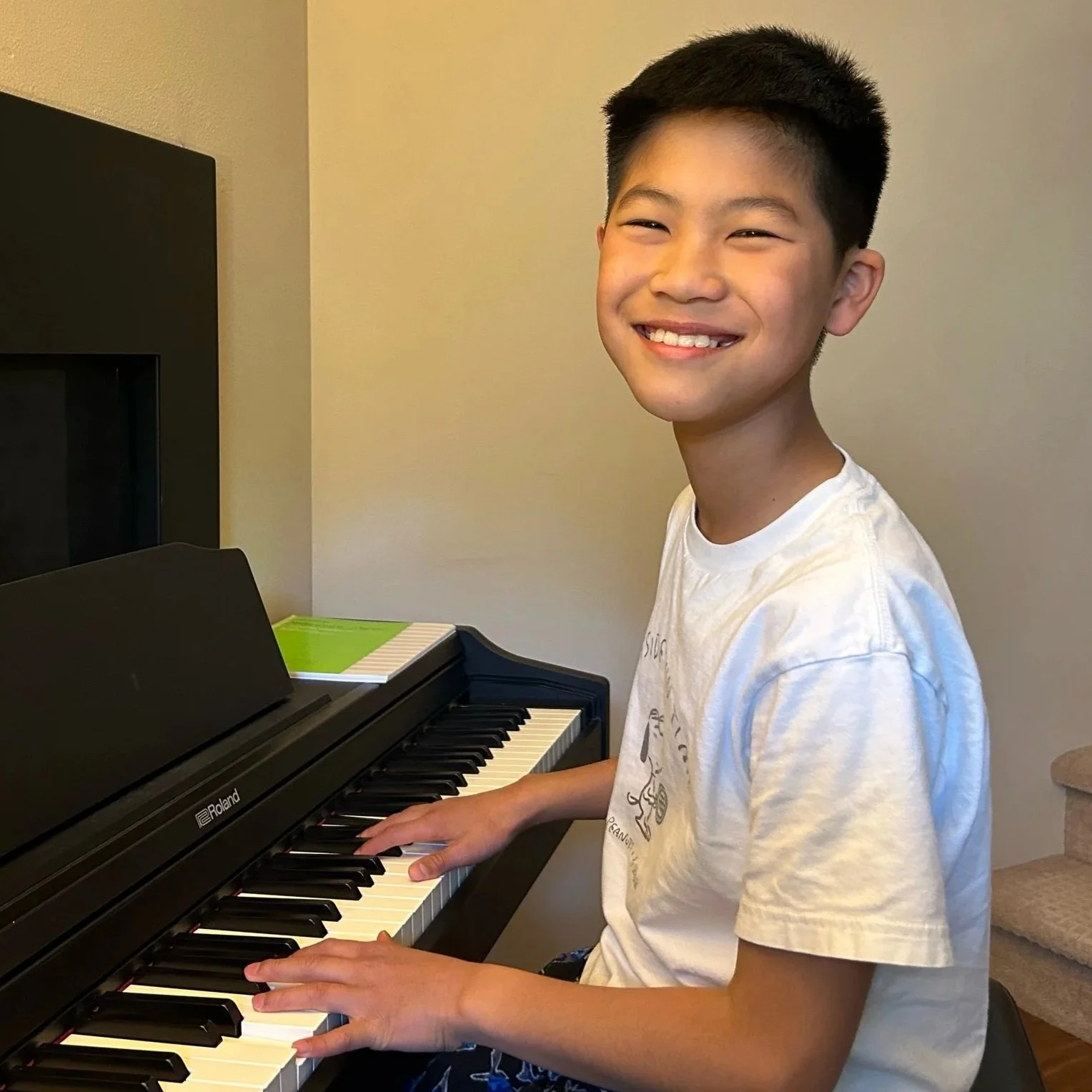
Schedule - help them find a consistent time to practice every day. They might need an alarm clock or sticky note in their bathroom mirror to help them remember each day. Also, add accountability. Check in daily that practice happened at least until it has become part of their daily schedule.
Checking themselves - Teach them to self-assess. I ask my students break the music into parts, notes, rhythm, dynamics and articulation, and then ask on a scale of 1 - 5 how well they played in each section. It may be easier to record themself first and then critique how well they played.
Assignment Complete - Confirm that they practiced everything on their assignment list each day. I once had a student show up for his lesson with his mother bragging about how much he practiced that week. As we went through his assignment, he was hardly able to play any of his pieces! His mother, confused, asked him what was happening because all week she heard his beautiful piano playing! He then confessed he had spent all his practice time playing music he already knew. While I do agree that it is important to continue playing music already learned, at least one-third of practice time should be dedicated to continuing with music already completed, Some time should also be dedicated to new music and some time to theory or technique practice.
Typically, students at this age know how to practice, but if they seem to have trouble knowing what to do once they are at the piano, give them some suggestions.
With individual pieces,
Break difficult sections into smaller parts - maybe 2 - 4 measures at a time.
Play each hand alone before putting hands together.
Play slow enough to play perfect rhythm and perfect notes.
Once a section has been mastered, play it an additional 3 - 5 times.
Fitting Practice Into Life - Teen-Agers to Adults
With older beginners, the biggest challenge is usually time. Finding thirty minutes every day isn’t always realistic, so instead, plan for five. The hardest part sometimes is just getting to the piano. But once you’re there, make those five minutes count. Choose a goal and finish it. If you have more time, stay longer and focus on another goal. If not, you’ve still made progress. Shorter daily practice sessions are far more effective than one long practice session. It’s the consistency and focus that really make the difference.
Ready to Make Piano Time Feel Easier?
Move Over Mozart offers two online programs,
Traditional, one-on-one private lessons
Our signature Crescendo Kids, beginning piano lessons for children
In both of these programs, your child is paired with a caring and engaging teacher who meets them right where they are. Lessons are simple, easy, and convenient, designed to fit naturally into your day while keeping your child motivated and progressing at their own pace. You’ll feel confident knowing exactly how to support piano time at home and your child will feel excited to sit down and play.
Schedule a free consultation and lesson to find out the best option for your child.
Your Comments And Questions
We want to hear from you! What questions do you have? What do you like best about this memo? How has our online lessons benefitted your child? Please leave your questions and comments below or email Pam directly at misspam@moveovermozart.net