

What you will LOVE about Crescendo Kids Lendemain
💛 Encouragement and connection through small-group learning
👩🏫 Support from a caring and engaged teacher
🎹 How much your child looks forward to class
🎶 The happiness of hearing your child share their music
https://www.moveovermozart.net/crescendo-kids-lendemain
Our Spring Recital is June 5, 6, & 7. Sign up early to reserve your spot!
Feature Article - Piano Practice Your Child Wants (Part 1 of 2)
By Pamela Cornell, Director
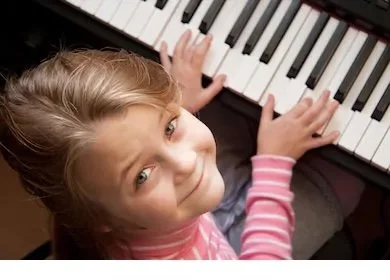
Children love music! Our piano program is unique in that we provide a method for your child to play piano with or without practice at home. However daily practice definitely increases how much they retain or how quickly they learn new concepts, allowing your child to get more out of each class. This article will focus on your child’s practice environment and give tips for a preschool-aged practice session. The next article will continue with tips for older children and adults.
Many parents have unpleasant memories of practicing an instrument at home. But now as an adult, although the practice time was ‘torturous,’ they still wish they had learned to play the instrument. But, they don't want to pass on those negative practice experiences to their children. So what is the best, most positive way to teach your child the valuable skill of music?
Well, first, throw away the old fashioned idea of sitting at the piano for 30 minutes each day! That will never work, and will kill any joy your child has about music. In fact, instead of calling it "practice" let's call it "piano time". Any time your child spends on the piano is considered "practice". The key here is to make piano time fun and motivating so your child will want to be at the piano.
Piano Setting and Environment
Have the piano/keyboard at an easy accessible place. If you have to set it up, or rearrange furniture just to play, piano time will become too much of a hassle. On the other hand, if it is always available, your child will find a few minutes here and there to play. I remember most of my piano time occurring while I was waiting for my mom to go somewhere. I also played when I needed a quick break in between other tasks, or when I was bored and looking for something to do. If the piano was not easy to get to, I would have skipped most of that practice time.
Having the piano in a central part of the home is also important. No one wants to feel isolated while practicing, but if the piano can be in a central gathering part of the home, then the child can practice while still being involved with the family. (Headphones are helpful for this as well.)
Have everything ready by the piano to keep the momentum going once practicing has begun. What is everything? Here is a list to get you started.
Essential Tools
Piano books
Binder with sheet protectors for loose music sheets
Blank manuscript - or blank staff paper
Metronome - there are free apps or there is also a metronome in Practice Space
Pencil (never use a pen on your music!)
Colored pencils - for marking music
Eraser - sometimes we want to erase a lot, so having an actual eraser is helpful
Sticky Notes - the square 3 X 3 size works great!
Computer, tablet/iPad, or phone for accessing Practice Space
Helpful for Games
Dice
Small marker or game piece that doesn’t fall between the keys
Alpha cards - A - G, one letter for each card
Note flashcards
A nice touch I have seen in a few homes is to have music certificates or awards displayed near the piano. This daily reminder of their music accomplishments can also be a great practice motivator.
For Preschool Ages
Yes! Even 3 year olds can “practice” but their piano time will look very different compared to their older siblings. First, make sure your home piano has our colored dots. Most of our pre-school music is color-coded. All of our preschool aged students receive self-adhesive colored dots for their piano at home. You can also use old-fashioned white adhesive stickers and color them. (Goo gone works great to remove the adhesive later.) You will also want to color code your child’s fingers so it is easier for them to match their fingers to the colors. We recommend dots on their knuckles so they can still see the colors as their fingers are curled to press the keys.
Choose a time that works best with your schedule and can be consistent every day. Maybe it is after brushing their teeth or after having a snack. By having a regular daily time, it will be part of their schedule, habit or daily rhythm. Whatever time is chosen, that is “piano time.” It is their time to choose what to play or do at the piano and for how long.
Giving your child a choice gives them the power of ownership to learn. Here are some options, or you may add a few of your own.
Play music they’ve already learned - this helps them feel a sense of accomplishment and satisfaction that they are learning and can play well.
Play their new song - learning new skills and building their own “repertoire”.
Create their own music - develops their ear to learn which notes sound good together and which don’t. The music may also reflect their current mood, which is a great way of expressing themselves.
Play a music game - always great to reinforce music theory, plus the interaction with a parent builds a positive connection.
Listen to music and dance, draw or play with a toy - again, developing their ear to hear quality sounds and variations in note timbres.
All of this is valuable and contributes to your child’s musical training as well as developing their ear, improving finger dexterity and improving their motivation to play more.
When playing a song from class, sit with your child and point to the music. Since your child doesn't know how to read yet, tracking music, reading left to right, top to bottom is a new concept and skill to learn. Even if your child does know how to read, having you point to their music helps them stay focused. As a bonus, they get special Mommy or Daddy time!
Let your child decide how long to stay at the piano as well. Typically, frequent, short intervals are best. For a 3 - 5 year old, two to three minutes is excellent piano time! You can always add more piano sessions in one day. But don’t feel disappointed or discouraged if your child doesn’t want to give a lot of piano time once in a while. We all experience ebbs and flows in our daily motivation. Having the discipline to do just a little, even for a few seconds every day, is the start of a daily habit and the habit is the start of regular practice.
In our next article, we will continue with tips on practicing for older aged students and adults.
We offer beginning piano classes for children at various locations and online. Schedule your free consultation with Miss Pam to find the perfect fit for your family. https://moveovermozart.opus1.io/w/freelesson
Your Comments And Questions
We want to hear from you! What questions do you have? What do you like best about this memo? How has our online lessons benefitted your child? Please leave your questions and comments below or email Pam directly at misspam@moveovermozart.net